 Digital Transactions Authoritative, insightful and timely information for payments professionals

Two reports, one from Mastercard Inc. and another from Omnisend, an email and SMS marketing platform for e-commerce businesses, indicate that sales during the 2025 holiday season will grow at a slower rate than the previous year as consumers wrestle with higher prices due to inflation and tariffs.
The Mastercard Economics Institute 2025 holiday-shopping forecast predicts sales during the holiday season will grow 3.6% from the previous year. Sales during the 2024 holiday shopping season, grew 4.1% year-over-year. Mastercard made its forecast using Spending Pulse data. The season runs from Nov. 1 through Dec. 24 each year.

Despite the year-over-year slowdown, online sales, excluding auto purchases, are expected to remain strong, increasing 7.9% from last year. In-store sales, by contrast, are not expected to be as strong, growing 2.3% year-over-year.
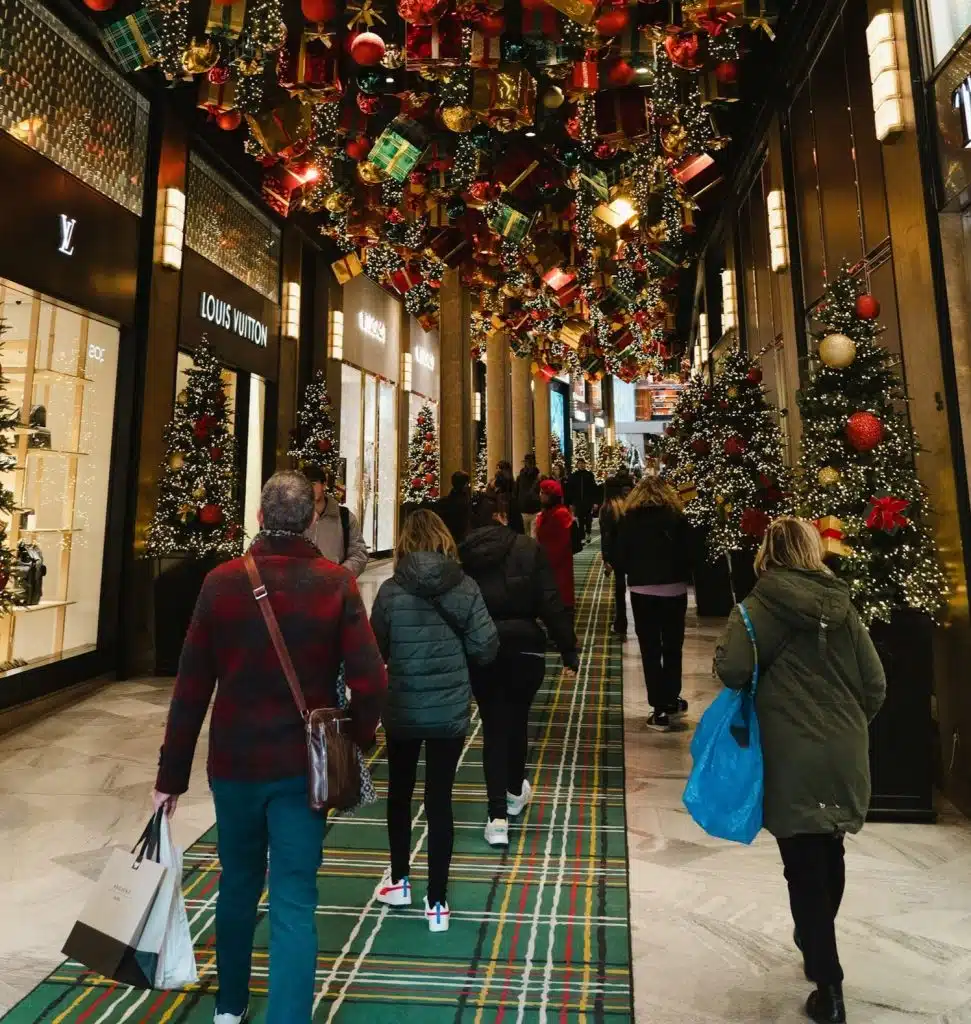
Inflation and tariffs are two culprits for the year-over-year drop off, according to Mastercard. “Inflation will make a larger contribution to overall sales growth than it did during the 2024 holiday shopping season, in part reflecting tariffs,” the report says. “Tariffs are a key uncertainty for 2025. Popular holiday items — including clothing and shoes, sporting goods, toys, jewelry, beauty products, and Christmas ornaments and trees — are already facing higher tariff rates compared to 2024.”
While some merchants may choose to absorb a portion of the price increases resulting from tariffs to remain competitive, large retailers that purchased and stocked holiday items in advance of the tariffs “are likely to have a competitive advantage,” the report says.
Consumers’ concerns about the impact of tariffs on prices are already starting to show, according to a report from London-based Omnisend, which surveyed 1,200 U.S. consumers.
Some 33% of respondents say they are seeing higher prices on select items, while 19% say they are avoiding shopping on Chinese-based e-commerce platforms such as Temu and Shein, while 16% say they plan to buy fewer or smaller gifts this season, according to the Onmisend report.
As consumers wrestle with higher prices, many say they will turn to buy now, pay later loans as a way to stretch their budget.
“Nearly half of shoppers tell us they’ll lean on buy now, pay later – to spread out gift purchases without piling on interest,” Marty Bauer, an e-commerce expert for Omnisend, says in a statement. “BNPL isn’t niche any more – last holiday set records for installment spending online. This season, the winners will be retailers who lead with price transparency, offer BNPL as a clearly explained option, and make it easy to shop … with gift picks under $25, $50, and $100.”
Some 18% of respondents say they will use BNPL loans for holiday gift purchases, while 45% of respondents say they are considering using BNPL, and 27% say they might use it.
As consumers turn to BNPL and other credit products to finance their holiday shopping, 47% of respondents expect to have post-holiday debt. Onmispend predicts U.S. consumers post-holiday debt could total $55 billion, or an average $213 per adult American.
Overall, 78% of respondents plan to spend less than last year, while 60% intend to keep total holiday spend below $500, the report says.