 Digital Transactions Authoritative, insightful and timely information for payments professionals

Nayax Ltd., a fintech that among other services provides payments-acceptance technology for electric-vehicle chargers and other self-service scenarios, on Monday expanded its footprint in EV charging Monday through a partnership with Autel Energy, a provider of EV chargers.
The deal calls for Nayax to embed its payment technology into an estimated 100,000 Autel EV chargers expected to be deployed across North America and Europe this year. The two companies entered into a strategic partnership in August to provide embedded payment solutions for Autel Energy EV charging stations.


Israel-based Nayax will embed its payments technology into Autel’s MaxiCharger AC Single charger, which is designed for large-scale destination, workplace, hospitality, fleet, and multi-family residential deployments. The integration of Nayax’s payment technology will enable the acceptance of contactless EMV, insert, and NFC wallet payments, as well as RFID and closed-loop payment options for fleets and controlled-access environments. As a result, Autel will offer a turnkey charging solution, the company says.
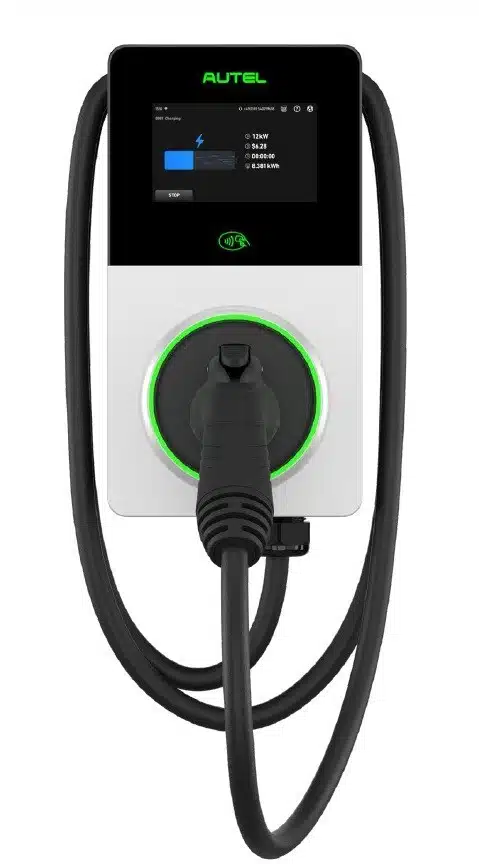
“One hundred thousand chargers is a lot, and there will be a lot of revenue coming out of them,” says Cliff Gray, principal at Gray Consulting. “EV charging is no longer a niche market, just look at the number of electric vehicles on the road in California. The EV industry can’t grow without charging stations.”
A study by PwC projects the number of EV charging points in the United States to grow from about 4 million to an estimated 35 million in 2030. “While building such a national charging network can be challenging and require numerous stakeholders and investments, it will be a necessary step to shape — and determine — the viability of a future [for] all-electric vehicular transport in the U.S.,” the report says.
Charging points at work are projected to be one of the fastest growing segments of the EV charging market, holding a 17% share in 2030, the report says. Another fast-growing segment will be charging points at apartment buildings, which are expected to have 15% share in 2025 and a 17% share in 2030.
“Such growth will likely hold important implications for companies as well as engineering and construction firms, which will likely be expected to build charging points into the design of new buildings (e.g., in parking lots or garages) — or retrofit that infrastructure in existing buildings,” the PwC report says.
Adds Gray: “Electric vehicles are cool, but the technology for the vehicles themselves is way ahead of the technology for charging stations. This is a big deal for Nayax.”